A research and cultural association

Intelligence begins in relationship.

MA-AI explores ancestral traditions in which mountains, rivers, forests, and other landscape features are not passive surroundings, but ancestors, relations, and active participants in collective life.

Swiss association · Founded in Bern · Working internationally

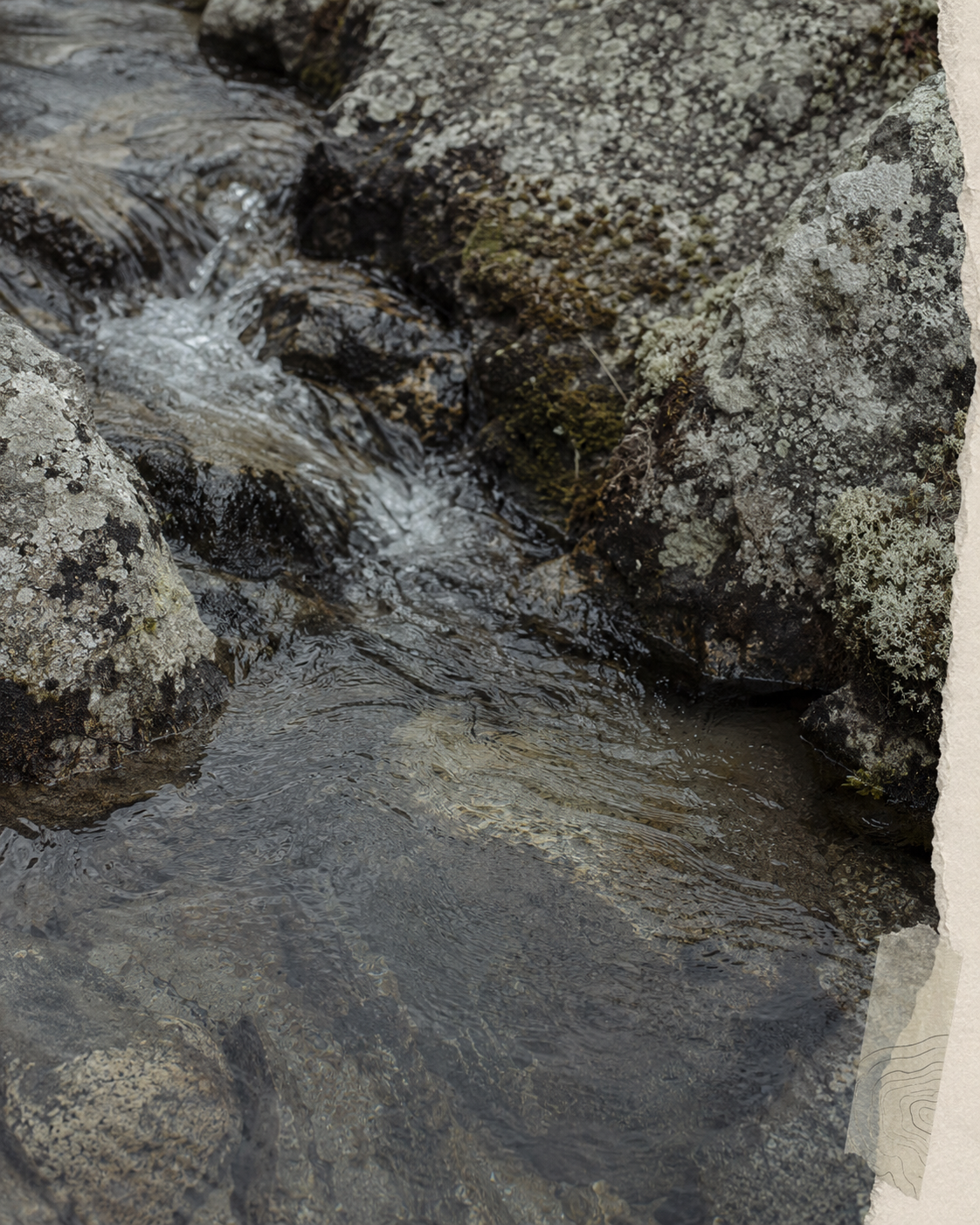
An alpine stream moving between lichen-covered rocks, observed as a field record
46°42′N 08°38′EFIELD NOTE 03
Artistic researchCultural exchangeCommunity educationEcological practice

Our inquiry

Landscapes are not backgrounds.

What becomes possible when landscape is encountered not as property or scenery, but as an ancestor to whom one is accountable?

MA-AI Gaian Relational Ecology is an independent Swiss association based in Bern. Through artistic research, field encounters, and cultural exchange, we ask what ancestral traditions might teach us about building technologies that participate in the living world rather than standing above it.

We do not treat these traditions as versions of a universal animism. Each is shaped by particular lands, languages, histories, and obligations. Our politically and religiously neutral inquiry begins with those differences rather than smoothing them away.

Distinct traditions · situated relations

Landscapes as ancestors

Our inquiry is global and open-ended. We are interested in Indigenous cultures and in the many distinct relational cosmologies often grouped under the words animism or vitalism. Rather than assume they all say the same thing, we ask whether close observation of natural rhythms and reciprocal dependence repeatedly gives rise to understandings of agency, ancestry, and obligation beyond the human.

Current research relationships extend from Switzerland and Japan to Tuareg communities and cultural histories in Mali’s Azawad and the wider Sahel. These are not fixed territories: each inquiry develops through the places, practices, and communities it brings into relation.

PRIMARY HISTORICAL LENS

Japan

Japan offers an extraordinary lens through which to study continuity and transformation. For more than ten millennia, Jōmon communities sustained complex hunter-fisher-gatherer lifeways adapted to varied environments.

Much later, Japan absorbed industrial modernity with exceptional speed. Yet relationships connecting mountains, forests, water, materials, seasonal cycles, ritual, and craft remained present—not as a simple unbroken survival, but through layered continuity, reinvention, and recovery.

Jōmon archaeological context
RECENT LEGAL EXAMPLE

Australia

Victoria’s Yarra River Protection Act recognizes Birrarung as a living and integrated natural entity. This important legal adaptation signals a change in mainstream perspective. It also raises a deeper question: what remains lost when an ancestral river must be translated into a category the state knows how to recognize?

Yarra River Protection Act
RECENT LEGAL EXAMPLE

Peru

In 2024, a court recognized the Marañón River and its tributaries as rights-bearing entities after a case led by Kukama women. The ruling offers vital protection while revealing the limits of a legal order that must grant recognition to a river already understood as living and ancestral.

Marañón River ruling

Legal personhood can provide an urgently necessary defence. But it is not the horizon of relational ecology. The deeper change is not to admit selected landscapes into human personhood, but to understand humans as participants within the ancestral worlds those landscapes have shaped.

Further research threads

ANCESTORS · DIVINATION · COSMOS

Early China and Daoist continuities

Shang oracle bones record questions addressed through royal ancestors, nature powers, and other agencies. Later Daoist traditions understand the dao as a spontaneous process manifested through bodies, society, nature, and cosmos. Their transformations, marginalization, suppression, and revival form an important line of inquiry for MA-AI.

Shang divination context
SCHISMOGENESIS · COMPARATIVE QUESTION

Difference formed in relation

Graeber and Wengrow use Pacific Coast societies to explore schismogenesis: communities defining themselves partly against neighbouring social forms. Their account invites a question rather than a conclusion—whether related dynamics might illuminate differences within Japan and across other regions.

The Dawn of Everything

Beyond mastery and retreat

Enter the relationship.

We do not approach the world as neutral observers or treat it as inert material. We begin inside the relationship, attentive to how our presence changes what becomes visible—and how the encounter changes us.

01

Observe

Attend closely to landscapes, materials, and rhythms we experience in the moment, as well as practices, protocols, representations and tales we take away afterward.

02

Interpret

Listen across oral traditions, artistic practices, scientific models, and lived experience, acknowledging that meaning changes as it passes between them.

03

Participate

Enter relationships respectfully and allow what is encountered to alter the direction of the work.

Underlying the inquiry

Nothing self-perpetuates alone.

Diversity is not a departure from common origin. It is how relationship keeps existence capable of change.

Humans begin more alike than different. Across generations, encounters with different landscapes, climates, beings, histories, and possibilities accumulate as distinct bodies, practices, languages, and ways of knowing.

Diversity then unsettles what has become established. Recurring rhythms—day and night, seasons, migration, growth and decay—hold these differences in relation without resolving their tension. The result is neither equilibrium nor chaos, but a stable, cyclical disequilibrium: the animus of adaptation.

This premise guides the research, but does not predetermine what ancestral traditions mean. We begin by observing, listening, and allowing each encounter to complicate the theory.

Work in development

Three connected lines of inquiry

Developed through international field research and shared through moving-image work, installations, writing, and public encounters.

01

Ancestral landscapes

Developing inquiry into traditions in which mountains, rivers, forests, and other places are encountered as ancestors and relations.

RESEARCH · FUTURE FIELDWORK
02

Japan: continuity & transformation

Research into the long Jōmon legacy and the layered continuities that endured Japan’s rapid assimilation of industrial modernity.

JAPAN · PREHISTORY · LIVING PRACTICE
03

Wild Intelligence

Artistic research into how AI and other technologies might participate in natural systems—not merely observe or extract from them.

FILM · INSTALLATION · RESEARCH

A record of learning

Not only discoveries. Also doubts.

Field Notes will be the association’s working journal: a place for promising encounters, difficult findings, abandoned ideas, and questions that resist a neat conclusion.

The first notes are in preparation. We want this record to show how the thinking changes—not simply announce finished answers.

Observation is not invisibilityEdible, but never merely foodNothing self-perpetuates alone
Publication begins 2026

An invitation

Accompany the work as it unfolds.

MA-AI has grown from six years of independent research and the trust of a small number of individual supporters.

We welcome people who feel an affinity with this inquiry and would like to help it continue. Individual contributions give the research time and mobility, make encounters across places and disciplines possible, and allow collaborators and knowledge holders to be compensated fairly.

Support is used simply and directly. In return, we share the work as it develops—including the discoveries, changes of direction, and questions that remain open.

Research timeTravel & fieldworkCollaborator feesPublications & access
Start a conversation

The founders

Carried by lives of research, practice, and exchange.

FOUNDER · CHAIRPERSON · ARTISTIC & RESEARCH DIRECTOR

Toshiaki Ozawa

Toshiaki is an artist-filmmaker and researcher whose work moves across cinema, contemporary art, environmental thought, and emerging technology. After more than three decades working internationally, he founded MA-AI to give public form to a research trajectory shaped by migration, Japanese and Korean heritage, collaboration, and long encounters with living practices.

CO-FOUNDER · ACADEMIC RESEARCHER · WRITER · VISUAL ARTIST

Anna Katharina Münch

Anna is a cultural anthropologist, researcher, writer, and visual artist whose work centres on nomadic Tuareg communities in Mali’s Azawad and the wider Sahel. She spent three years living and working among Kel Alhafra communities. Her interdisciplinary doctoral research at the University of Bern and Swiss TPH combined anthropological, linguistic, and epidemiological methods to examine how Islamic belief, embodied knowledge, political marginalisation, and access to medical systems shape health, illness, and care—particularly in the lives of women and children.

Her monograph Nomadic Women’s Health Practice: Islamic Belief and Medical Care among Kel Alhafra Tuareg in Mali grew from this fieldwork. She later held research positions at Princeton University and the University of Florida’s Emerging Pathogens Institute. Her visual art explores relationships among landscape, memory, animals, plants, and cultural inheritance.

Association details

Legal form

Swiss association (Verein)

Established

Bern, Switzerland · 2025

Orientation

Politically and religiously neutral

Governance

Board oversight and conflict-of-interest safeguards

Advisor

Jamie Allen · artist, researcher, and Senior Lecturer at the Basel Academy of Art and Design FHNW. His work examines the material and metabolic infrastructures of media. He has contributed to the Anthropocene Curriculum, an international collaborative framework for developing new forms of knowledge and practice in response to planetary change.

Contact · Bern, Switzerland

Let’s begin with a conversation.

We welcome enquiries about partnership, funding, research, cultural exchange, and future public programmes.

ma-ai@gmx.netMA-AI Gaian Relational Ecology
Südbahnhofstrasse 4
3007 Bern, Switzerland